For a straightforward first crochet setup, choose a 5.0 mm aluminum hook and a smooth, light-colored #4 Medium yarn. Acrylic is a practical choice for a practice swatch, granny square, or simple scarf; use smooth cotton instead if the project is a washcloth.
A 5.0 mm hook is commonly marked H-8 in US sizing, but letter sizes can vary slightly by manufacturer. Check the metric measurement on the hook and follow the project pattern when it specifies a different size.
What to Look for in a First Crochet Hook
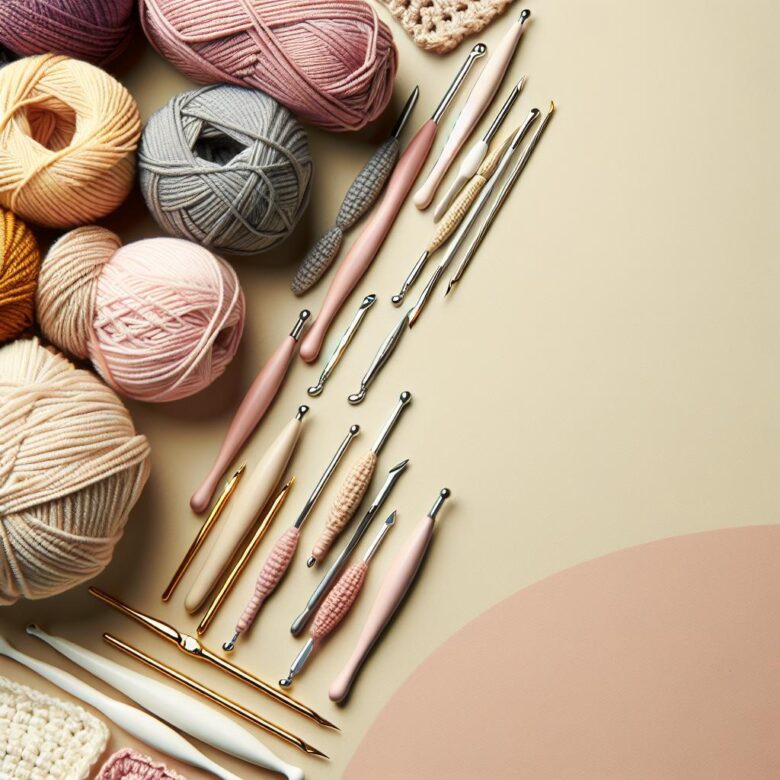
The hook should pass through the loops without catching individual strands. It should also feel secure without requiring a tight grip. Material, tip shape, handle design, and finish all affect how the hook moves through yarn.
Hook materials compared
| Hook material | Advantages for beginners | Possible drawbacks |
|---|---|---|
| Aluminum | Smooth, durable, widely available, and easy to find in common sizes | Very slick yarn may slide off more easily; an unfinished or damaged hook can snag |
| Bamboo or wood | Adds friction, which can help control slippery yarn | May feel slow with cotton or tight stitches; the finish must be smooth |
| Plastic or resin | Lightweight and commonly used for larger hook sizes | Mold lines can catch yarn, and some hooks flex under a tight grip |
Aluminum is the most versatile starting point for a medium-weight yarn. If the yarn repeatedly slips off the hook, a smooth bamboo or wood hook may offer better control. If the hook drags through every stitch, switching from wood to metal may help.
Inline and tapered hook tips
An inline hook generally has a head that sits in line with the shaft and a more defined groove. Some crocheters find that this makes loop size easier to control. A tapered hook narrows toward the head and may be easier to insert into tight stitches.
Neither profile is universally better. Manufacturers also use these terms somewhat differently, so prioritize a smooth head and comfortable movement over the label. If possible, try each profile with the same yarn before buying a full hook set.
Standard handle or ergonomic grip?
A basic aluminum hook is enough to learn with. An ergonomic grip can be more comfortable if a thin shaft encourages you to pinch tightly, but the handle does not correct tight tension by itself.
Hold the hook securely but loosely enough that it can move in your hand. Take a break if you develop persistent pain, tingling, or numbness rather than trying to crochet through it.
Check the hook before buying
- Confirm the metric size stamped on the hook.
- Run a fingertip carefully around the head and throat to check for rough edges.
- Inspect plastic hooks for raised seams and wooden hooks for splinters.
- Choose a handle that does not force your fingers into an awkward position.
- Buy one suitable hook before investing in an entire set.
The Easiest Yarn to Learn With
Look for a yarn that makes each loop easy to distinguish. A useful default is a solid, light or medium color in #4 Medium weight, made with a smooth and even construction.
#4 Medium may be described as worsted or Aran, although those terms are not perfectly interchangeable across every brand or region. Two yarns carrying the same weight number can still differ in thickness, loft, and recommended hook size.
Choose a smooth, stable construction
A firmly spun, plied yarn is usually easier to handle than a fuzzy or loosely spun yarn. The strands are less likely to separate when the hook enters a stitch, and the tops of the stitches remain visible.
Chainette and tubular yarns can also be smooth, but highly airy constructions may behave differently from traditional plied yarn. For a first purchase, examine the strand and avoid yarn that visibly separates or sheds with light handling.
Why color matters
Cream, light gray, pale blue, and other light solid colors make it easier to see the top “V” of each stitch. Black, navy, heavily variegated yarn, and rapid color changes can hide the exact place where the hook should be inserted.
Acrylic, cotton, wool, and blends
| Fiber | Suitable first uses | What to consider |
|---|---|---|
| Acrylic | Practice swatches, scarves, granny squares, and simple accessories | Care is usually straightforward, but some yarns feel slippery, squeak against certain hooks, or become fuzzy after repeated unraveling |
| Cotton | Washcloths, dishcloths, coasters, and bags | Clear stitch definition, but less elasticity can make tight tension tiring; loosely plied cotton may split |
| Wool | Scarves, hats, and warm accessories when the pattern calls for it | Elasticity can make stitches comfortable to form, but care requirements, felting risk, and skin sensitivity vary |
| Blends | Projects suited to the fibers listed on the label | Behavior depends on the blend; a smooth acrylic-cotton blend can balance stitch definition and flexibility |
Do not assume that one fiber works for every project. For example, acrylic is useful for practice but should not replace the specified yarn in potholders or other items exposed to high heat because synthetic fibers can melt. Follow a pattern designed for that purpose and use the recommended fiber.
Beginner Hook and Yarn Pairings
The following combinations are practical starting points when a pattern does not provide a specific hook. A pattern’s yarn weight, metric hook size, and gauge take priority over this table.
| Project | Suggested yarn | Common starting hook range | Why it works |
|---|---|---|---|
| Practice swatch | Smooth, light-colored #4 acrylic | 5.0–5.5 mm | Stitches are large enough to examine without using an especially bulky yarn |
| Simple scarf | #4 acrylic or a smooth blend | 5.0–6.0 mm | Creates a fabric that can be adjusted for more or less drape |
| Washcloth or dishcloth | Smooth #4 cotton | 4.5–5.5 mm | Cotton provides clear stitch definition and suits an absorbent project |
| Granny square | #4 acrylic or smooth blend | 5.0–5.5 mm | The stitch groups and chain spaces remain easy to identify |
| Amigurumi | Smooth yarn in the weight specified by the pattern | Follow the pattern | Stuffed toys generally need a dense fabric, so the hook may be smaller than the yarn label suggests |
A jumbo hook and very thick yarn may appear easier because the stitches are large, but bulky materials can be tiring to grip and may obscure stitch structure. Medium-weight yarn is usually a more manageable learning tool.
How to Match the Hook to a Pattern and Yarn Label
If you are using a pattern, start with its recommendations rather than choosing the hook independently.
- Find the yarn weight. Match the pattern’s weight category as closely as possible. Fiber and construction also affect the finished fabric.
- Check the required amount. Compare the pattern’s total yardage or meterage with the amount on each yarn label.
- Use the metric hook size. This avoids confusion between letter and number systems.
- Make a gauge swatch when size matters. Hats, garments, bags, and fitted accessories can turn out the wrong size if gauge is ignored.
- Adjust one hook size at a time. If you have more stitches than the pattern specifies across its measured area, try a larger hook. If you have fewer stitches, try a smaller hook.
The hook shown on a yarn label is a starting suggestion, not a rule for every stitch pattern. A lacy scarf, dense bag, and stuffed toy may all use different hooks with the same yarn.
Make a Small Handling Swatch First
Before committing to a project, use the selected hook and yarn to make a small sample. If you are only practicing, chain roughly 15–20 stitches and crochet enough rows to create a palm-sized piece. For a project that provides gauge instructions, make the swatch in the stated stitch pattern and size.
As you work, check the following:
- Can the hook enter each stitch without force?
- Does the hook catch individual strands repeatedly?
- Can you identify the top two loops of each stitch?
- Does the fabric have the density or drape required by the project?
- Can you maintain a relaxed grip?
If a fitted project’s instructions say the finished item will be washed, wash and dry the gauge swatch in the same manner before making final measurements. Some yarns change after laundering.
Common Hook-and-Yarn Problems
| Problem | Likely cause | What to try |
|---|---|---|
| The hook will not enter the stitches | The starting chain or working tension is too tight | Relax the yarn hand, enlarge each loop on the full shaft of the hook, or use a slightly larger hook when gauge allows |
| The starting edge is much tighter than the fabric | The foundation chain was made too tightly | Make the chain with a hook one size larger, then switch back to the project hook |
| The hook keeps splitting the yarn | The yarn is loosely twisted, or the hook is entering between plies | Slow down, watch the point of insertion, and try a smoother or more rounded hook |
| The yarn sticks to the hook | The hook surface and fiber create too much friction | Try a polished metal hook, especially when using cotton or another grippy yarn |
| Loops repeatedly slide off | The combination is very slick or the hook is being rotated too far | Reduce the rotation and consider a smooth wood or bamboo hook for added control |
| The fabric is stiff | The hook may be too small, or the tension may be too tight | Try the next larger size unless the project intentionally requires dense fabric |
| The fabric has unwanted gaps | The hook may be too large for the intended fabric | Try the next smaller size and confirm that every stitch is formed correctly |
| The edges gain or lose stitches | The first or last stitch of a row is being missed or worked twice | Count every row and place removable markers in the first and last stitches |
Yarns That Are Harder to Learn With
These yarns can produce attractive projects, but they make it harder to see and correct a first set of stitches:
- Chenille and velvet yarn, because stitches disappear into the pile
- Eyelash, faux-fur, and boucle yarn
- Very fuzzy mohair-style yarn
- Loosely spun single-ply or roving-style yarn
- Very fine thread and lace-weight yarn
- Black, very dark, or rapidly changing colors
Save these materials until you can recognize stitches by both sight and touch.
A Sensible First Shopping List
- One 5.0 mm aluminum hook, commonly marked H-8 in US sizing
- One or more skeins of smooth #4 Medium yarn in a light solid color, with the quantity based on the pattern
- Scissors
- A blunt yarn needle for weaving in ends
- Two removable stitch markers or small safety-pin-style markers
- A measuring tape if the project has gauge or finished dimensions
For a first practice swatch or simple acrylic project, the 5.0 mm hook and smooth #4 yarn combination is a dependable place to begin. For a cotton washcloth, amigurumi, fitted hat, or any pattern with a stated gauge, let the project instructions determine the final hook size.

The Cozy Stitch Editorial Team creates practical crochet guides for beginners and everyday makers. Our content covers stitches, yarn and hook selection, pattern reading, troubleshooting, amigurumi, handmade gifts, and functional projects for the home. Guides are reviewed for clarity, usefulness, and accuracy and may be updated when improvements are needed.