A high-quality crochet gift is not necessarily the most elaborate or expensive option. It is the one that suits the child’s age, feels comfortable, withstands the family’s normal laundry routine, and arrives with clear care and use information.
For babies and young children, decorative details require extra caution. Loose parts, long loops, fringe, open stitches and poorly secured stuffing can turn an attractive project into something parents hesitate to use. The ideas below prioritize practical construction without treating a handmade item as automatically safe or compliant.
Choose a Gift That Fits the Occasion
| Gift idea | Why it works | Main quality check | Important limitation |
|---|---|---|---|
| Washable blanket | Useful beyond the newborn stage and easy to personalize | Balanced drape, secure border and no fringe or loose appliqués | Keep blankets out of an infant’s crib, bassinet and other sleep space |
| Cardigan or sweater | A memorable baby-shower or birthday gift with everyday value | Washed gauge, comfortable neckline and season-appropriate size | Sizes vary between patterns; ask for measurements when possible |
| Washcloth set | Simple, practical and easy to combine with another gift | Soft fabric, colorfast yarn and neatly woven ends | Some cotton becomes firm after air-drying, so wash the swatch first |
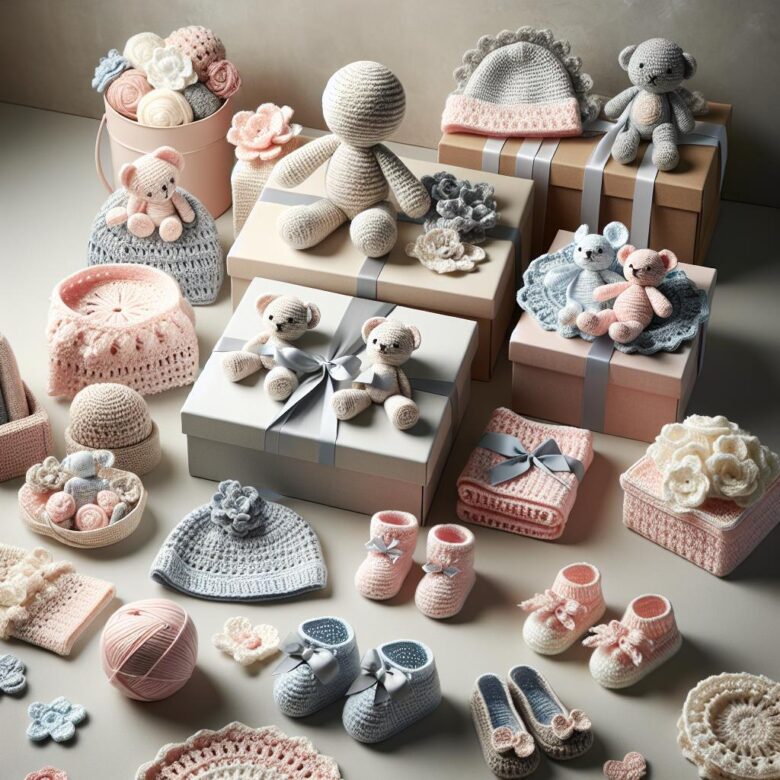
| Hat and booties | Quick coordinated accessories for photos and supervised outings | Stretchy fit without tight cuffs, ties or detachable decorations | Short wear window; not intended for sleep or unsupervised use |
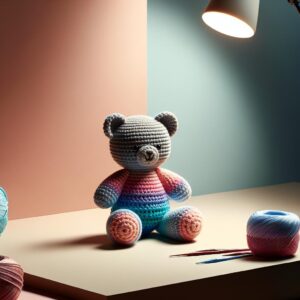
| Soft toy or lovey | A distinctive keepsake for a baby shower or first birthday | Dense fabric, contained stuffing and embroidered features | Requires the most careful inspection and should stay out of infant sleep spaces |
| Decorative name panel or bunting | Provides personalization without creating a wearable sizing problem | Even lettering, coordinated colors and secure hanging construction | Hang cords and decorations well beyond a child’s reach |
If the recipient’s preferences are unknown, a washable blanket or washcloth set is usually easier to plan than a fitted garment. For a first birthday, a larger cardigan or decorative keepsake may remain useful longer than newborn-sized accessories.
Safety Guidance and the Limits of a Home Inspection
This article provides crochet construction guidance, not product-safety certification. A particular fiber, tight stitch or embroidered face does not prove that a finished item complies with applicable toy, textile or children’s product rules. Requirements vary by product and location, and makers who sell or distribute children’s items are responsible for checking the rules that apply to them.
A careful home inspection can reveal obvious weaknesses, but it is not a substitute for formal testing. Before gifting an item for a baby or young child:
- Leave off beads, bells, plastic eyes, pom-poms, buttons and other small detachable decorations whenever possible.
- Avoid fringe, long ties, drawstrings and large decorative loops.
- Check every seam, join and embroidered feature by pulling it firmly by hand. Repair anything that shifts, opens or exposes an end.
- Make sure toy stuffing cannot be seen through the stitches or escape around seams.
- Remove pins, clips and temporary markers before wrapping the project.
- Tell the caregiver how the item is intended to be used and laundered.
Blankets, loveys, toys, hats and other loose items should be kept out of a baby’s crib, bassinet and sleep area. They are better presented as items for awake, supervised use. A crocheted garment also should not be described as sleepwear unless it meets all requirements that apply to that product category.
Select Yarn for the Project, Not Just for Softness
Yarn can feel soft in the skein yet become stiff, fuzzy or stretched after laundering. Start with the care label and consider how the family is likely to wash the finished item.
| Fiber option | Useful qualities | What to check |
|---|---|---|
| Smooth machine-washable acrylic | Easy care, broad color range and generally lightweight | Pilling, static, shedding and whether the fabric softens or stiffens after drying |
| Cotton | Good stitch definition and suitable for washcloths, blankets and warm-weather garments | Weight, shrinkage, dye transfer and firmness after drying |
| Cotton-acrylic blend | Balances cotton’s definition with lighter weight and easier drying | Exact care instructions, since blend ratios and finishes differ |
| Machine-washable wool or wool blend | Warm and resilient for cool-weather garments | Recipient preference, skin sensitivity and whether the family can follow the care directions |
| Viscose or bamboo-derived blend | Soft feel and fluid drape | Growth, loss of shape and reduced stitch stability in heavy or loosely worked projects |
Avoid highly fuzzy or shedding fibers such as mohair, angora and eyelash-style novelty yarns for infant gifts. Also reconsider any yarn that requires complicated care unless the recipient has specifically requested it.
If a yarn carries a textile certification, verify that it applies to the exact yarn line being purchased and read what the certification covers. Such labeling can provide useful material information, but it does not certify the completed handmade gift.
Wash a Project-Specific Swatch
- Crochet a swatch in the stitch pattern, hook size and colors planned for the gift.
- Record its dimensions and photograph the fabric before washing.
- Wash and dry it according to the yarn label and the care method the recipient is likely to use.
- Measure it again and inspect for growth, shrinkage, pilling, shedding, stiffness and color transfer.
- Rub the damp swatch with a clean white cloth as a basic screen for dye transfer. This check is useful but does not guarantee complete colorfastness.
- If the swatch changes significantly, adjust the hook, stitch pattern or yarn before beginning the full project.
Do not automatically choose a smaller hook than the yarn label recommends. A tighter gauge can help contain stuffing and reduce large gaps, but it may make a blanket or garment unpleasantly stiff. The correct gauge depends on the project.
Construction Details That Make a Gift Last
Blankets
For a baby blanket, choose a fabric with modest openings and enough drape to fold comfortably. Single crochet, half double crochet, linked double crochet and compact moss-stitch variations can produce a more stable fabric than very open lace. Check the actual swatch rather than relying on the stitch name alone.
Work a simple border that lies flat and reinforces the edges. Skip tassels and fringe for infant gifts. If the blanket uses motifs, join them securely and inspect every intersection, since that is where gaps and loose tails are most likely to appear.
Describe the blanket as being for supervised awake use, such as floor play or cuddling with a caregiver, rather than calling it a crib blanket.
Cardigans and Sweaters
Garments are most successful when the maker knows the child’s approximate chest measurement, current clothing size and local season. Pattern labels such as “6–12 months” are only a starting point; compare the pattern’s finished measurements with a garment that currently fits the child.
For baby gifts, a buttonless wrap, pullover or open-front design reduces the need for small fasteners. Avoid neck ties, drawstrings and long loops. Check that cuffs stretch comfortably, the neckline passes over the head as intended, and armholes do not become restrictive after washing.
If sizing information is unavailable, select a later size based on the season in which the child is likely to wear it. Simply making a garment larger is not enough if a warm sweater will fit during summer.
Hats and Booties
Hats and booties work best as additions to a larger gift because babies can outgrow them quickly. Use a stitch pattern with gentle stretch and compare the finished measurements with the pattern’s size chart after laundering.
Keep decorations flat and securely stitched. Do not add chin ties, dangling cords or loosely attached pom-poms. Crochet booties are not protective walking shoes, and both hats and booties should be removed for sleep.
Soft Toys and Loveys
Use a dense fabric that keeps the filling inside when the toy is squeezed. If stuffing shows between stitches, change the hook size, yarn or pattern before continuing. Use washable filling suitable for the project, and keep all ends and knots inaccessible inside the finished piece.
Embroidered eyes and facial details are preferable to plastic eyes for infant gifts, but embroidery still needs inspection. Work the features directly into the fabric, secure the yarn inside before closing the piece, and repair any strand that can be lifted.
A toy or lovey should include an age-appropriate use note and remain out of a baby’s sleep space. When making an item for sale, remember that substituting embroidered eyes does not by itself establish compliance with toy regulations.
Washcloth Sets
A set of two or three washcloths is a practical choice when sizing and nursery colors are unknown. Use a smooth, washable cotton or cotton blend and a textured stitch that does not create long loops. Rounded corners and a simple border help the cloth keep its shape.
Wash the finished set before gifting, then check that the cloths remain soft and that dark or saturated colors do not show obvious dye transfer.
Personalize Without Weakening the Project
Names, initials and custom colors can make a simple project feel special, but personalization should not create loose layers or distort the fabric.
- Choose the fiber before matching colors. The same shade can appear different on matte cotton and shiny acrylic.
- Buy enough yarn from the same dye lot. Record the brand, line, color name and dye lot in case the project needs a repair.
- Swatch letters at the actual gauge. Use graph paper or charting software to check proportions before adding a name to the gift.
- Block or launder the base piece before final placement. Pin or baste the boundaries of a surface-stitched monogram so it remains visually centered.
- Keep additions flat. For items intended to be handled by a baby, integrated colorwork or closely worked embroidery is preferable to raised appliqués.
- Consider future use. An initial or small motif is easier to reuse for another child than a full name and birth date.
Common Problems and How to Correct Them
| Problem | Likely cause | Correction |
|---|---|---|
| Blanket feels stiff | Hook is too small or stitch pattern is too dense for the yarn | Try a larger hook or a lighter yarn while keeping openings modest |
| Garment grows after washing | Fiber and stitch pattern have too much drape | Use the washed gauge to recalculate size or choose a more stable yarn |
| Border ripples | Too many stitches were added along the edge | Remove the border and space stitches more evenly |
| Border pulls inward | Too few stitches or a hook that is too small | Add edge stitches or use a slightly larger hook for the border |
| Stuffing is visible | Toy fabric is too loose | Use a smaller hook, denser stitch or more suitable yarn; do not rely on overstuffing |
| Monogram looks off-center | It was positioned before the base fabric was washed or blocked | Finish the base first, mark its center and baste the lettering boundary |
| Ends work loose after laundering | Tails were cut short or woven through too little fabric | Unpick the area if necessary and weave a longer tail in multiple directions through the stitches |
Include a Useful Care Card
A small care card adds more value than decorative packaging. Include:
- Fiber content and yarn care instructions
- Recommended wash and drying method
- Finished garment or blanket measurements
- A reminder to inspect seams, embroidery and attachments regularly
- The intended use, including a note to keep blankets and toys out of an infant’s sleep area
Avoid attaching the card to the gift with a pin. Tie it to the outer packaging or place it loose inside the package.
Final Gift-Ready Checklist
- The yarn was swatched and laundered using the planned care method.
- The finished item is soft enough for its purpose and has not changed size unexpectedly.
- Seams, motif joins, embroidery and woven ends remain secure under a firm hand check.
- No stuffing is visible or accessible.
- There are no loose small parts, long ties, fringe or snag-prone loops.
- The size and season make sense for the child.
- Personalization lies flat and does not distort the fabric.
- A care and intended-use note is included.
For an uncomplicated baby-shower gift, choose a washable blanket or washcloth set in a smooth yarn. For a birthday, consider a seasonally sized cardigan or a decorative keepsake. Whichever project you select, careful material choice, washed-gauge planning and restrained finishing will contribute more to quality than extra embellishment.

The Cozy Stitch Editorial Team creates practical crochet guides for beginners and everyday makers. Our content covers stitches, yarn and hook selection, pattern reading, troubleshooting, amigurumi, handmade gifts, and functional projects for the home. Guides are reviewed for clarity, usefulness, and accuracy and may be updated when improvements are needed.